



Here's a frustrating reality check: you could craft the perfect email campaign (killer subject line, gorgeous design, irresistible offer) and it might still end up rotting in the Gmail Promotions tab where emails go to die.
Your customers never see it. They never click it. They definitely never buy from it. You've essentially sent a beautifully wrapped gift directly into the void.
Welcome to the inbox placement crisis that's quietly killing ecommerce email revenue. While you're obsessing over open rates and click-through percentages, the real battle is happening before customers even see your email: Primary inbox vs. Promotions tab.
Landing in Primary means your email shows up alongside personal messages, triggers mobile notifications, and competes against maybe 5-10 other emails. Landing in Promotions means you're buried under 50+ marketing messages that most people scroll past on autopilot.
The difference? Brands that consistently land in Primary see dramatically higher engagement and revenue. Those stuck in Promotions watch their email ROI slowly circle the drain, no matter how good their creative is.
Enter two solutions claiming to solve this inbox placement nightmare: Maverick's Inbox Placement Optimizer, which automatically optimizes your email HTML to land in Primary without any ongoing work, and Mailmend, which gives you static code blocks to manually manage.
One runs itself and continuously improves. The other requires you to become an amateur email deliverability engineer.
Spoiler alert: these are not created equal.
In this deep-dive comparison, we'll break down exactly how Maverick and Mailmend stack up on product capabilities, inbox placement results, pricing models, and what it actually takes to implement each solution.
Whether you're already researching Mailmend pricing or just discovering that inbox placement is the hidden bottleneck in your email strategy, this guide will show you why automated optimization beats manual tinkering every single time.
Understanding the Inbox Placement Problem
Before we dive into solutions, let's talk about why inbox placement matters so much more than most ecommerce brands realize.
When Gmail, Apple Mail, and other email clients decide where to place your marketing emails, they're using complex algorithms that analyze hundreds of factors in your email's HTML structure, sending patterns, engagement history, and content signals.
Get enough of these factors right, and you land in Primary. Get them wrong (or even just mediocre) and you're banished to Promotions or worse, spam.
The impact on your email revenue is staggering. Emails in Primary get opened at 2-3X higher rates than those in Promotions. They trigger mobile notifications that create immediate visibility. They compete against personal messages from friends and family instead of 50 other brands screaming for attention.
For ecommerce brands sending dozens of campaigns per month, consistently landing in Primary can mean hundreds of thousands of dollars in additional revenue annually.
But here's where it gets tricky: the factors that determine inbox placement are constantly evolving. What works today might not work in three months. Gmail updates its algorithms. Customer engagement patterns shift.
Your sending reputation fluctuates based on how different segments interact with your emails. Static solutions that worked great at implementation slowly degrade over time as the inbox placement landscape changes around them.
This is why the "set it and forget it" vs. "continuously optimize" debate matters so much. Inbox placement isn't a one-time fix; it's an ongoing optimization challenge that demands either constant manual attention or intelligent automation.
What is Maverick’s Inbox Placement Optimizer?
Maverick’s Inbox Placement Optimizer is purpose-built to solve one critical problem: rescuing ecommerce emails from the Promotions tab and moving them into the Primary inbox. It targets the exact spot where customers actually check messages, trigger notifications, and take action.
The technology works by optimizing your email’s HTML structure before it hits the recipient’s server. Because email clients like Gmail parse code to decide where a message belongs, Maverick’s algorithms adjust the underlying HTML to maximize Primary placement. To your customer, the email looks identical; to the inbox provider, it looks like a priority.
What sets Maverick apart is its fully automated, API-integrated system. Once connected to your ESP (like Klaviyo or Omnisend), it runs entirely in the background. There is no manual work, no need to understand HTML, and no deliverability metrics to babysit. You simply send campaigns as usual, and Maverick optimizes them automatically.
Unlike static fixes, this system is dynamic and adaptive. As inbox algorithms evolve and engagement patterns shift, Maverick learns and adjusts its optimization strategy. What you implement today won’t become obsolete in three months; instead, it continuously improves based on real-time data from thousands of campaigns.
Finally, Maverick eliminates guesswork through automatic A/B testing. By creating a holdout group for every campaign, the system provides clear, attributable data. You see exactly how many additional opens, clicks, and sales were generated specifically by landing in Primary—turning vague promises into measurable revenue.
What is Mailmend?
Mailmend takes a manual, hands-on approach to the inbox placement challenge. Instead of using automated algorithms, it provides static HTML/CSS code blocks that you must manually implement into your email templates. It is a tool designed for those who prefer to manage their own code adjustments.
The core offering consists of code snippets meant to improve how email clients parse your messages. Once you receive these blocks, the responsibility falls on your team to insert them, configure them correctly, and maintain them across various templates. It requires a consistent technical effort to keep things running.
This manual approach offers direct control over your email code, which can be reassuring for brands with deep technical resources. Because you are handling the snippets yourself, you aren’t relying on a "black box" algorithm; you are working with visible code that your developers can theoretically audit and understand.
However, the static nature of these blocks is a significant hurdle. They do not evolve on their own. If Gmail updates its filters or your sending reputation fluctuates, the code remains exactly the same. To maintain effectiveness, you must proactively reach out for updates and manually swap them into all your templates.
Furthermore, Mailmend lacks a built-in testing infrastructure, making it difficult to measure true incremental impact. Without automatic holdout groups, it’s hard to know if a lift in performance came from the code blocks or just a lucky subject line. This lack of transparency, combined with paid trials and long-term contracts, places the financial risk squarely on the brand.
Head-to-Head Comparison: Product Capabilities
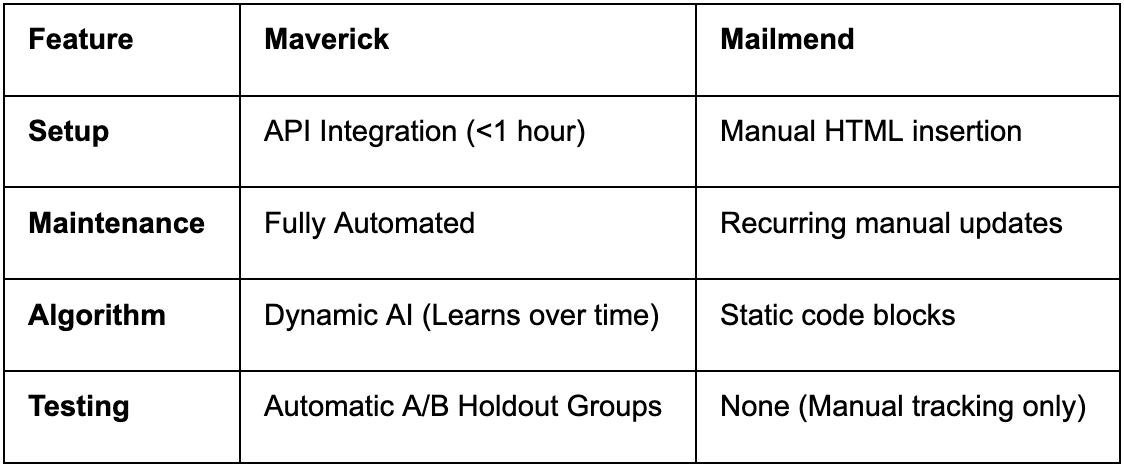
Automation & Intelligence
The philosophical divide here is simple: Maverick is an automated system that works while you sleep; Mailmend is a manual tool that requires constant attention. Maverick’s API-integrated platform optimizes every campaign automatically in the background. Once the initial one-hour setup is complete, your team never has to lift a finger or understand the technicalities of HTML deliverability again.
Maverick doesn't just run—it learns. Its machine learning models analyze performance across thousands of campaigns to identify what currently triggers Primary inbox placement. When Gmail or Apple Mail stealthily update their algorithms, Maverick’s system detects the shift and adapts your email code in real-time. This means your inbox placement rates actually improve the longer you use the platform.
Mailmend takes the opposite approach by providing static code blocks for manual implementation. These snippets remain unchanged unless you proactively swap them out. There is no "learning" involved; the code you use today is identical to the code you’ll have in six months, regardless of how Gmail’s filters have evolved or how your audience's engagement patterns have shifted.
For lean marketing teams, this is a resource crisis. Maverick requires a one-time setup followed by passive revenue growth. Mailmend requires a technical team member to manually insert code into every template, troubleshoot rendering issues, and periodically implement updates. One is a scalable asset; the other is a recurring chore that inevitably becomes a bottleneck.
Performance Monitoring & Optimization
Claiming better results is easy, but proving them requires rigorous measurement. Maverick automatically builds A/B tests with proper holdout groups for every send. A segment of your audience receives the optimized version, while a control group receives your standard email. Because both versions look identical to the user, you can isolate the exact revenue lift generated purely by better inbox placement.
This continuous testing happens without any manual configuration. Every campaign generates clean data showing exactly how many additional opens, clicks, and sales Maverick provided. The system also monitors trends over time, alerting you if placement slips in certain segments so the algorithm can automatically refine its strategy. It’s a self-correcting loop designed for sustained, long-term performance.
Mailmend offers no built-in testing infrastructure. If you see a performance bump after implementing their code, you’re left guessing: was it the code, a better subject line, or just a seasonal trend? Without a statistical holdout group, it is impossible to calculate true ROI. You are essentially paying for a tool and "taking it on faith" that it’s actually moving the needle.
The risk of "flying blind" is that static solutions eventually degrade. Without an automated alert system, you might not realize your inbox placement has slipped until your overall email revenue has been declining for weeks. Maverick catches these dips instantly and adjusts; Mailmend leaves you to manually track complex deliverability metrics just to see if your investment is still working.
Data & Reporting Capabilities
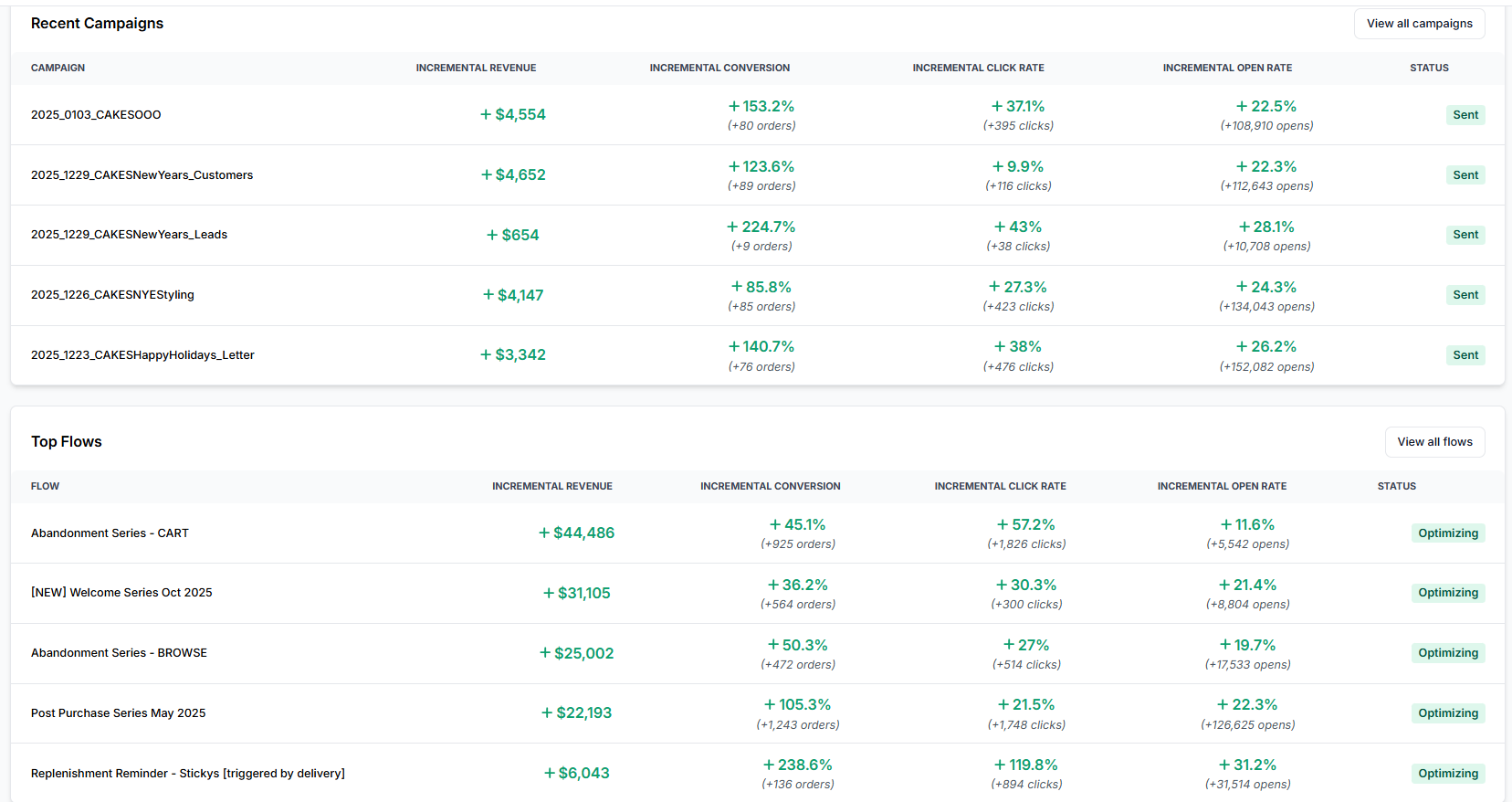
Maverick’s comprehensive dashboard transforms complex deliverability data into actionable business insights. It consolidates lifetime metrics across all optimized campaigns, breaking down incremental revenue and conversion lift at a glance. You can see which specific message types—like promotional blasts vs. newsletters—benefit most from Primary placement, allowing you to prioritize your strategy.
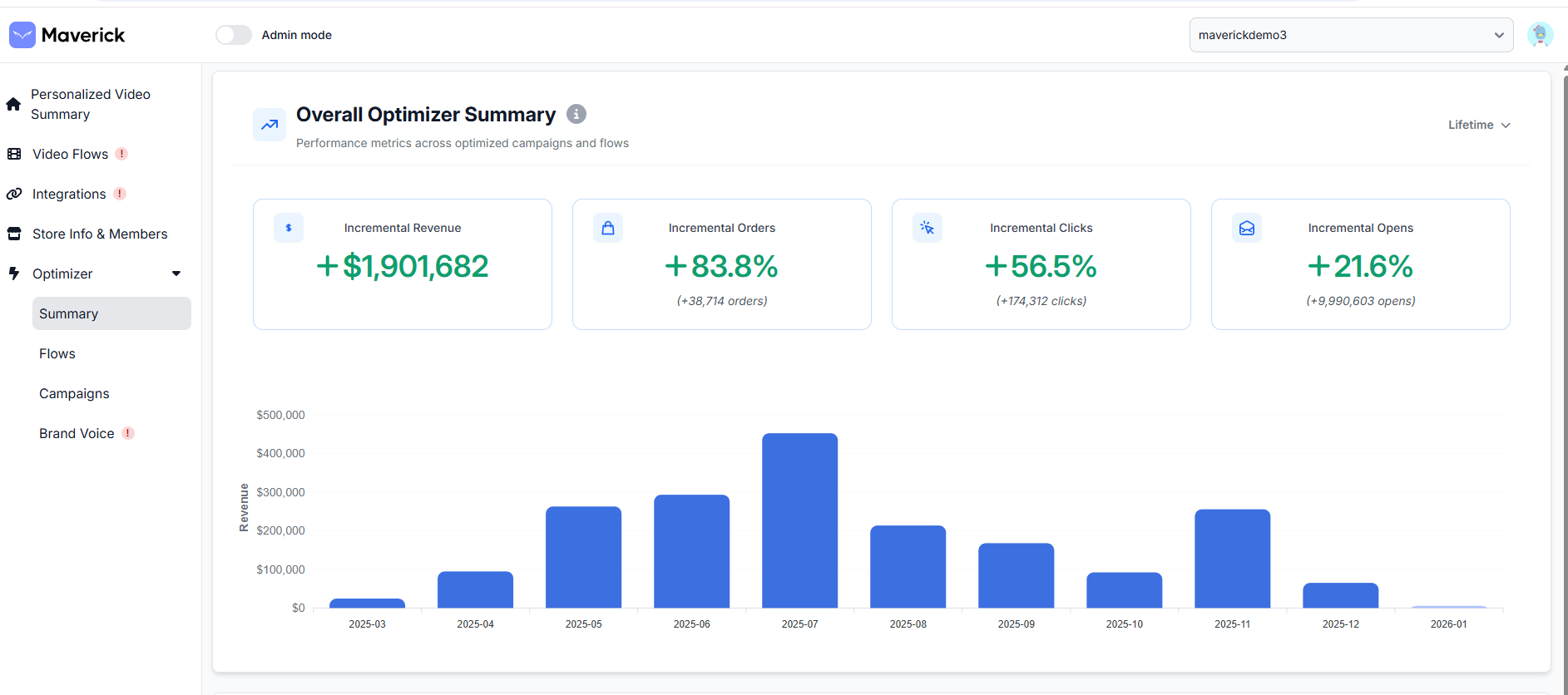
This granular visibility makes ROI reporting effortless. When stakeholders ask for the impact of your deliverability investment, you can pull up a report in minutes showing the exact dollar amount Maverick added to the bottom line. It removes the "black box" of email deliverability and replaces it with cold, hard numbers backed by automated A/B testing.
Mailmend lacks a reporting dashboard entirely. To gauge performance, you must manually piece together data from your ESP’s analytics, which can’t distinguish between placement-driven wins and other variables. This lack of transparency makes it nearly impossible to justify the ongoing cost or identify which customer segments are most responsive to your optimization efforts.
Ultimately, Maverick’s data enables better decision-making. By seeing exactly where the lift is strongest, you can refine your segmentation and campaign calendar for maximum impact. Mailmend leaves you guessing, forcing you to maintain technical code blocks without a clear view of whether they are still contributing to your brand’s growth.
Integration & Setup Experience
Maverick is designed for marketing teams, not engineers. It connects directly to major platforms like Klaviyo and Omnisend through native API integrations. Setup typically takes less than an hour and involves no changes to your existing templates, creative assets, or workflows. You continue sending emails as you always have, and Maverick handles the rest behind the scenes.
Because it is fully automated, there is zero maintenance burden. You aren’t manually enabling a "primary inbox" switch for every campaign or copying and pasting snippets of code. This hands-off experience ensures that the tool remains consistently active and effective, even if your team is busy or your technical staff changes.
Mailmend requires a manual, template-by-template implementation. Someone on your team must be comfortable editing HTML and ensuring the blocks render correctly across dozens of different email clients. This process must be repeated for every new template or brand update, creating a massive opportunity for human error or accidental omissions.
This ongoing maintenance creates a "knowledge dependency." If the person who initially implemented the Mailmend blocks leaves your company, their replacement must be trained to manage and troubleshoot the code. Maverick eliminates this risk by being a centralized, platform-level solution that provides consistent value without requiring a dedicated technical gatekeeper.
Pricing Comparison: Investment & Risk Analysis
Trial Offerings
When high-stakes revenue is on the line, the ability to test risk-free is non-negotiable. Maverick offers a 30-day completely free trial with no credit card required and no strings attached. You get full access to the platform, allowing you to run live campaigns on your actual audience and see genuine performance data before spending a single dollar.
This "results-first" philosophy removes the barrier to entry for cautious brands. You can validate the exact ROI for your specific audience without navigating pressure tactics or artificial urgency. It’s a transparent approach: if the tool doesn't deliver measurable lift in your actual dashboard, you haven't lost a cent.
In contrast, Mailmend requires a paid trial, forcing you to invest upfront before knowing if their approach works for your business. This creates immediate financial risk and removes the ability to experiment cost-free. You are essentially paying for the privilege of seeing if their static blocks can deliver on their promises.
For ecommerce brands with tight budgets, this difference is critical. Maverick allows you to build a business case for the tool using your own data. Mailmend asks you to gamble on their effectiveness, betting that a manual solution will justify its cost before you have a single data point to prove it.
Contract Terms & Flexibility
A vendor's contract structure reveals their confidence in their own product. Maverick operates on a month-to-month model with no long-term commitments. You stay because the platform consistently crushes your revenue goals, not because you’re trapped by a piece of paper you signed six months ago.
This flexibility is vital in the fast-paced ecommerce world. If your strategy pivots or you need to reallocate budget for a major launch, you can cancel anytime without penalties. The month-to-month structure also ensures Maverick’s incentives stay aligned with yours—they have to deliver value every single month to retain your business.
Mailmend typically relies on long-term contracts, locking you into extended periods regardless of performance. If their static code blocks lose effectiveness as inbox algorithms evolve, you are still obligated to pay. This creates a "sunk cost" scenario where you’re stuck with a tool that no longer moves the needle.
Ultimately, contract flexibility equals control. Maverick’s model forces them to stay at the cutting edge of deliverability and support to earn your renewal every 30 days. Mailmend’s locked-in approach puts the burden of performance on the brand, often leaving you stuck with a solution that has gradually become obsolete.
Real Brand Results with Maverick: What the Data Shows
The most compelling argument for any marketing tool is straightforward: does it actually work, and can you prove it with real data?
Maverick customers consistently see dramatic improvements in campaign performance directly attributable to better inbox placement:
Birddogs, the DTC apparel brand known for its signature shorts and irreverent marketing, implemented Maverick and achieved a 28% increase in campaign conversion rates and 17% boost in click rates, generating an average of $3,272 in additional revenue per campaign. Their emails moved from getting buried in Promotions to showing up in Primary where customers actually check messages.
Caden Lane, the South Texas baby brand creating stylish nursery bedding and personalized keepsakes, saw a 44% increase in both campaign click rates and conversion rates after implementing Inbox Placement Optimizer, translating to $4,790 in additional revenue per campaign. For a brand whose customers are busy parents, showing up in Primary instead of Promotions dramatically increased visibility.
Colorescience, the professional skincare innovator with evidence-backed mineral formulations, experienced a 48% conversion rate increase and 62% click rate improvement, generating $12,776 in additional revenue per campaign. Even for a premium brand with engaged customers, inbox placement made an enormous difference in email effectiveness.
Laundry Sauce, the luxury-scented laundry care brand, achieved the most dramatic click rate improvement—a stunning 99% increase in campaign clicks along with 20% more conversions. Their sensory storytelling and email-driven revenue strategy became far more effective when messages consistently landed in Primary.
Cakes Body, the innovative non-adhesive silicone nipple cover brand that gained traction through viral TikTok marketing, saw a 79% increase in campaign conversion rates and 129% boost in click rates, adding $4,927 per campaign in incremental revenue. For a rapidly scaling DTC brand, consistent inbox placement was crucial for maintaining email channel effectiveness.
These aren't cherry-picked outliers or theoretical projections. They're measured, incremental results from real A/B tests showing the specific impact of Primary inbox placement versus Promotions tab placement.
Every one of these brands implemented Maverick, ran proper holdout groups, and can point to dashboard data proving exactly how much additional revenue came from better inbox placement.
Conclusion: Making the Right Choice for Your Ecommerce Brand
Let's cut through the noise: comparing Maverick's Inbox Placement Optimizer to Mailmend is like comparing a smart thermostat that learns your preferences and adjusts automatically to a programmable thermostat you have to manually reconfigure every season.
Sure, both technically control temperature, but one does it intelligently while you sleep, and the other requires you to remember to fiddle with settings every few months or watch your energy costs silently creep up.
Here's what this comparison really boils down to: Do you want inbox placement optimization that works harder than you do, or do you want to become your own part-time deliverability engineer?
Look, we're not saying Mailmend is worthless. We're just saying there's a reason Netflix beat Blockbuster, Spotify beat CDs, and autopilot beats manually adjusting cruise control every thirty seconds. Technology that automates and optimizes intelligently beats manual approaches that require constant human intervention.
So here's our genuinely no-pressure challenge: Take Maverick's free 30-day trial. Let us integrate with your ESP (takes less than an hour, we'll help). Send your campaigns like normal while Maverick automatically optimizes in the background.
Watch your dashboard fill up with real A/B test results showing incremental lift. Calculate exactly how many additional dollars came from Primary inbox placement versus Promotions.
If Maverick doesn't deliver measurable incremental revenue that exceeds the cost by a comfortable margin, cancel. No contracts to break, no awkward conversations, no penalties.
But we're betting that when you see your campaigns consistently landing in Primary, generating 30-80% higher conversion rates, and adding thousands of dollars per campaign in incremental revenue (all without requiring any ongoing work from your team) you'll wonder why you ever considered paying someone to give you HTML homework.
Your customers check their Primary inbox multiple times per day and mostly ignore Promotions. Your marketing team has better things to do than maintain static code blocks and manually monitor deliverability metrics. Your business deserves marketing technology that proves its value with rigorous data, not tools that ask you to take their effectiveness on faith.
The future of email revenue belongs to brands whose messages actually get seen. The Primary inbox is where that happens. And automated, continuously optimizing systems are how you get there consistently, reliably, and profitably.
Stop letting your emails rot in the Promotions tab. Start landing in Primary where your customers actually pay attention. The difference between the two isn't just a few percentage points—it's thousands of dollars per campaign, and it compounds every month you wait.
Ready to see the incremental lift for yourself? Your dashboard is waiting.
Start your free Maverick trial today and discover what happens when inbox placement finally works as hard as you do. (Spoiler: it works harder, learns faster, and never asks for a raise.)


